Events
GlasgowNice N Sleazy
Thursday Doors: 19:00
New
Never miss a show!
Get alerts for new shows, pre-sales, and waitlists for The Joy Hotel.
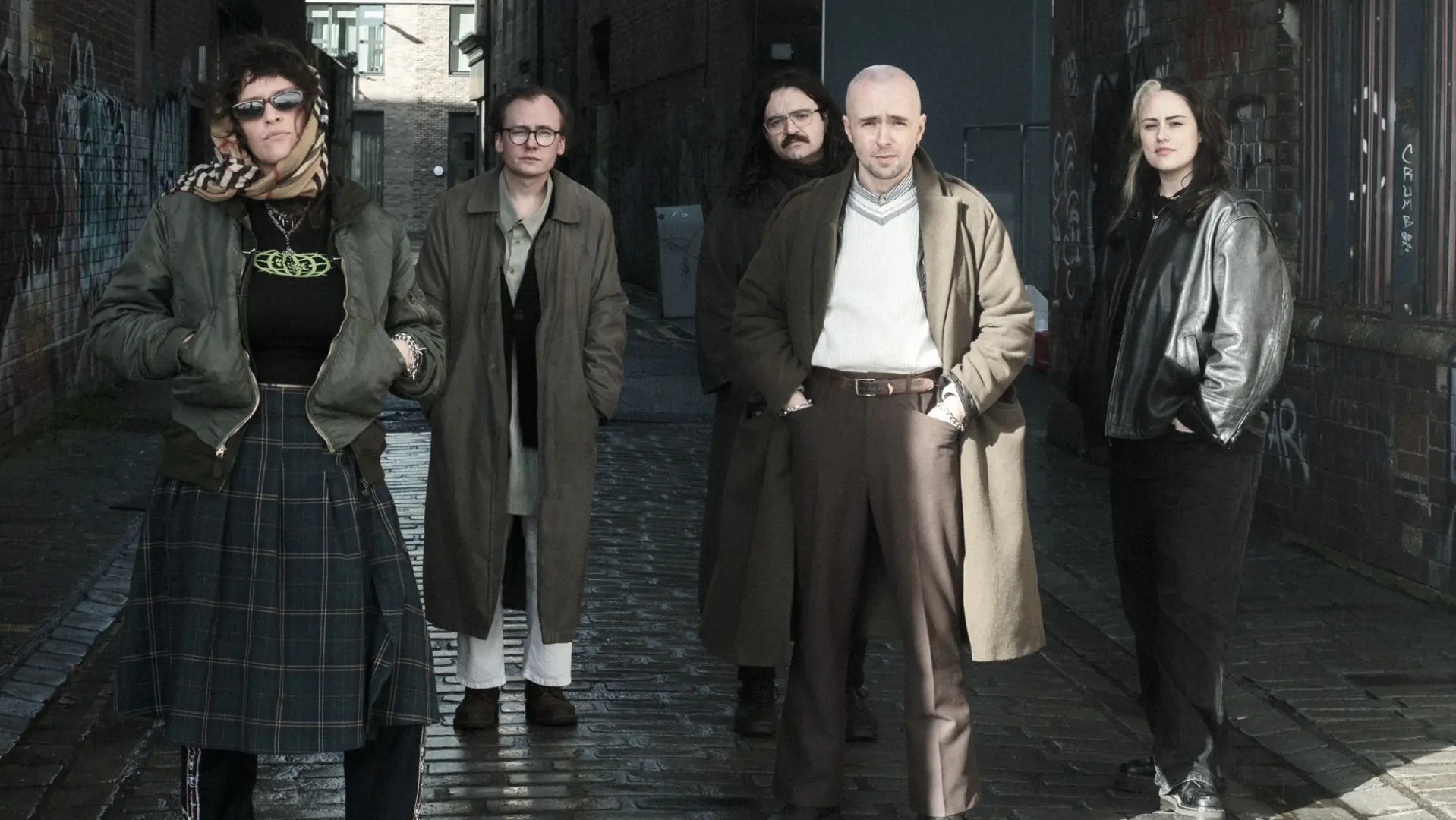
Favourite ArtistEmme Woods is remembering the moment she rolled the dice on bandmate-to-be Luke Boyce. They’d
first crossed paths late in 2017, which might surprise those familiar with The Joy Hotel’s debut
Ceremony. After all, that album’s songs are so perfect in concept and execution they feel like they’ve
existed forever, while Woods and Boyce’s vocals sit together so comfortably you’d swear they’ve been
harmonising since they were bairns. But no, Woods and Boyce were full-grown adults when they met,
ships that had been passing through random Glasgow house parties, never really connecting until the
night Woods heard Boyce playing guitar. “I thought, ‘Hmm, he’s quite good’,” Woods continues. “I
had some shows in Los Angeles lined up, so I asked him if he’d come play with me. I’d only met him
two or three times, but I rented us a van to travel and sleep in, and we set off.” She pauses for a
second, thoughtfully. “It was quite risky, really. It could have gone really badly.”
“I don’t drive, so if it hadn’t worked out, I don’t really know what I would have done,” adds Boyce,
perhaps envisioning himself abandoned by the roadside somewhere in the Californian desert. “It was
all quite impulsive and fast and decisive. I like people that just get an idea in their head and then
immediately act on it.”
This impulsiveness was already very much Emme’s modus operandi. 18 before she first picked up an
instrument, she’d jumped in with both feet – not content with simply trying to learn other people’s
songs in her bedroom, she pushed herself to attend open-mic nights, to learn in public, make
mistakes, and get better. “I couldn’t really play guitar, so I was just really picking at two strings. But
once I started performing, I felt, ‘This is what I want to do. I’m just gonna keep doing it, and either I’ll
eventually get good or I’ll just stay bad.’ I was singing folky stuff on my acoustic guitar, like a teenaged
boy, even though I was 21, an absolute late-bloomer.”
Boyce, by contrast, was an absolute early-starter. As kids, he and his brother Jack would be invited by
their parents to select an album from the rack that they’d all listen to over dinner. “Music became like
a puzzle to me,” he says. “I’d listen and ask myself, ‘How do people do this?’ I started playing guitar
when I was 10, learning other people’s songs, almost reverse-engineering them, to figure out how they
made me feel the way they did – and how I could make something like that myself. I wanted to solve
that puzzle for myself.”
Boyce started “various attempts at a psych-rock band. I was always striving to be in a band with a lot
of members, a lot of strings to my bow.” Woods, meanwhile, trod water at the open-mics, devoting
endless time and energy to working on her songwriting. “I was fully self-managed and was self-
releasing my songs,” she remembers, referencing the sort of drive that inspires an unsigned, unknown
artist to book shows in Los Angeles and then choose a guy she hardly knows to accompany her. But
the shows were triumphs, leaving Woods and Boyce with the suspicion they’d each connected with
their kindred spirit. “Emme was solo and looking for the right band,” Boyce says. “I was writing, and
looking for someone to sing. I realised I had to convince Emme to give up her solo career and start a
band with me.”
“It was organic,” says Woods, of her shift from solo artist to band-member. “We played, then we
jammed, then we started writing together. And once we’d assembled the group and were playing all
the time, I knew I couldn’t go back to playing with session players.” The line-up of family and friends
– including Boyce’s brother Jack on drums, Woods’ ex-girlfriend Jenny on guitar –hunkered down to
work. Woods and Boyce would spent hours on Woods’ bed, drinking wine and writing songs, and
perhaps silently marvelling at how quickly they’d gelled. “We never had a discussion about the style of
music we’d play – nothing was off-limits,” says Boyce. But if their connection came easy, they worked
hard at the music – two eight-hour rehearsals a week for the band’s first 18 months. “We played our
first show in March 2020,” says Woods. “And then the whole world shut down.”
Silenced by the pandemic, Boyce and Woods just kept on writing and planning; when the world
opened up again, they booked time at storied studio Rockfield and prepared to record Ceremony,
their debut statement. They had a limited amount of time to cut the tracks, as they were financing the
album themselves; also, they had elected to record the album live-to-tape and, as Woods notes, “tape
is expensive”. The choice of tape was more than just a throwback to the methods of the classic greatswhose influence permeates The Joy Hotel’s bones. “With digital recording, there’s a temptation to
keep re-editing everything,” says Boyce. “You lose the sense of what a band sounds like – they end up
sounding like how politicians speak, slimy and fake.”
They cut Ceremony in ten days, recording three songs a day. “We were so well-rehearsed we kicked
the arse out of every song,” says Woods. “Before going in the studio,” adds Boyce, “we put a phone on
the floor of our rehearsal space and played through our songs. Any that didn’t sound good on those
voice memo recordings didn’t come into the studio with us.” Still, for all the preparation, Boyce
admits “we hadn’t left ourselves enough time to comfortably make an album.” So they made it
uncomfortably, pushing themselves to breaking point. “That we pulled it off felt good.”
But Ceremony is not the kind of album where modesty and humility are appropriate. Over those ten
days, The Joy Hotel cut a masterpiece, a suite of subtly interlocking epics that called upon the power
of rock, the sweetness of pop, the wisdom of folk and myriad other elements to deliver an album that’s
truly timeless. The impact of the classics – the albums that would have soundtracked the Boyce
brothers’ dinners in their youth – is indelible here, trace echoes of Abbey Road-era Beatles, the
Aretha who slayed the Fillmore, Pink Floyd at their most graceful and economic are audible within
those tracks. But The Joy Hotel’s gift isn’t simply impeccable taste – it’s something altogether more
alchemical, taking rock’s fundaments and renewing them, removing any sense of cliché or
overfamiliarity, using the language of the classics to tell their own stories. The romantic, desperate,
soaring and life-affirming likes of Jeremiah, the inspiring While You’re Young, the profound exeunt
Small Mercy, are unalloyed triumphs, betraying more ambition and confidence than a debut can
typically muster, a grander vision than modern bands usually imagine.
They celebrated its release last July with characteristic modesty – The Joy Hotel save their sense of
the grandiose for the music. “We got together, watched School Of Rock, drank some prosecco,” smiles
Woods. “The next day I took my friend’s dog for a walk, listened to the album on my phone, and it was
a wonderful moment, so peaceful.”
She’s not listened to the album since. Having painted their (first) masterpiece, The Joy Hotel have
their eye on the future – their future – and where their prodigious talents, their humble sense of craft
and their hungry vision might take them. Their sophomore peak (slumps be damned) has been
written, rehearsed and demoed, and they’ve booked three weeks at La Fret, a studio in France, to
commit it to tape. But while they’re confident the lightning that graced Ceremony will strike a second
time, they’re changing up their approach for album #2. “We’re rethinking how we go about making an
album,” says Boyce. “We’re not recording live-to-tape this time, we’re incorporating more electronics,
drum loops, processing, and stripping back the arrangements.”
Anyone worried that The Joy Hotel are about to “fix” something that was well and truly not broken
can rest easy, however. “The songs are much better,” Boyce grins, bashfully. “It’s a huge step forward.”
“A lot of the songs on the first album feel quite grandiose, conceptual,” Woods adds. “On the second
record, we want to bring it down to a more personal level, to be more intimate. It's definitely easier to
appreciate the smaller details as you get older.”
They’re not ditching all the lessons they learned from Ceremony and the journey to getting it made,
however. “We’re carrying over that sense that we can just do whatever we want,” says Boyce. “We’re
not afraid to push in any direction.” And why should they be? Magic is The Joy Hotel’s medium, and
magic never lets down the courageous. “Alchemy is what’s at play here, in terms of bringing all our
influences into the frame,” Boyce nods. “We’re consciously shedding some of the skin from the last
album, and stepping into the future.”
You’d be bonkers not to follow them.