Events
GlasgowThe Garage, Glasgow
Wednesday Doors: 19:00
New
Presale
General Onsale
On sale soon
In early autumn 2025, MEEK gave a digital stream of her anthemic signature tune, Fabulous, to a friend. He was DJing that evening in the packed, neon-hued Chinatown gay joint, Ku-Bar, London’s favoured home of emerging pop smashes. Meek is the deeply, blissfully, gloriously ironic and real surname of singer/songwriter/unapologetically outlandish pop vamp, Georgia Meek. For her forthcoming debut album, MEEK allowed herself one unwritten maxim to apply to all tunes. “These are songs that say I’m going to make my own space. I’m here, I’m fucking weird, I don’t care, deal with it.”
Let’s let her take up the tale. The experience at Ku-Bar was expedient and immediately readable. “I jumped up on the bar and started lip-syncing along,” she says. “I did half of the first intro and then everyone – literally everyone in the bar - was screaming, ‘I’m so fucking fabulous.’” Fabulous is one of those tunes that lodges in the brain not just on first listen, but during the first four bars. Propulsive, energised pop majesty. “The whole place went fucking nuts, it was so fun.” In terms of road-testing your material, there can be no more stringent acid test than trying it out, loud in a neighbourhood gay disco, while high-kicking on the bar. “I knew the song was instant,” she adds. “I just didn’t know how instant.”
How did MEEK get here? Like everyone that wants to shout to be heard, Meek comes from a mixture of an ordinariness she had to reject hard and a deep trauma she couldn’t help but process. She is the only daughter of a wedding dress shop assistant mother, from Ripley, an estate outside of Guildford and a father who dropped dead (“Literally out of nowhere”) when she was 16, leaving the prodigiously gifted Georgia in loco parentis to her two younger brothers. “And all that entailed.” By 18, she was studying music at BIMM, while living with a physically and emotionally abusive boyfriend she’d met online, to fill the horrific loneliness gap arriving in the capital, knowing nobody and having recently buried one parent, while becoming estranged from the other (don’t worry, things are good with mum, now. “She’s my biggest fan”) can sometimes result in. “I wanted to understand everything,” she says, “and I knew that if I wanted to really do this, I would have to do it all by myself.”
Incrementally, during a Production Masters (“More women should do production. I don’t want to be at the will of a load of blokes in a storage unit in East Acton.”) and self-schooling with the ride-or-die female friends and gay buddies who helped her out of her domestic violence nightmares, her songwriting fire began to catch attention. Instead of looking to her immediate surroundings, checking out charts and streaming stats, Georgie widened her influence to the classics, the greats. “I love these outcast characters that came from nothing and invented themselves. I just always found that so inspiring. They gave me a lot of hope, when there was pretty much none.”
All the while, disillusioned by the music industry and the relentless service jobs keeping her afloat; she knew a true goal was in sight. To become the voice of the disaffected: loud, unashamed, a clarion call of working-class virtue and vice. “I want to reach people who have felt marginalised, different, uncool, weird. We, as a people, are the most influential people on the planet. We’re the army.”
MEEK is not a work in progress. She is fully formed, earned her stripes, comes from nothing, nepo-baby baiting execution of timeless pop brilliance. While sounding directly descended from the DNA of famed countercultural misfits and bona fide pop aces, all strewn across the decades, her music is a no messing, straight shoot for the top. Georgia Meek understands that people like her only get one chance to make a first impression. Frequently, her songs will open out with a stringent big note, a walloping guitar figure, the best hook in her almanac of songwriter-ly resources. Because they have to. “I’ve never had the option to ask,” she says. “I’ve always had to take. I’ve always had to force my way through closed doors. That’s what shapes my sound. Yes, we will start with a huge vocal note to make people turn around and listen. Yes, I will say in the studio, give me some hair-raising guitar windmills. Let’s do that. You waste thirty seconds and you’ve lost it.”
Alongside Fabulous, there is a whole battalion of one-shot pop genius songwriting magic hidden up MEEK’s sleeve. Songs that intimate the Sparks back catalogue were definitely meant for a shop assistant’s kid from the Home Counties. There is Poor Face, the Common People for a generation of privileged try-hards (“fuck them”). As Gay As It Gets, the long awaited anthemic tribute to the relationship between women and their gay best friends (“a relationship, a love affair really, as old as time, yet not one with a song attached to it? What?”). Or Even The Rich Die Young, a reminder to all the pretty people, well, “that we all look the same in the grave”, she laughs. MEEK’s raucous laugh is about to become a very familiar pop trope. Mordant humour is her thing.
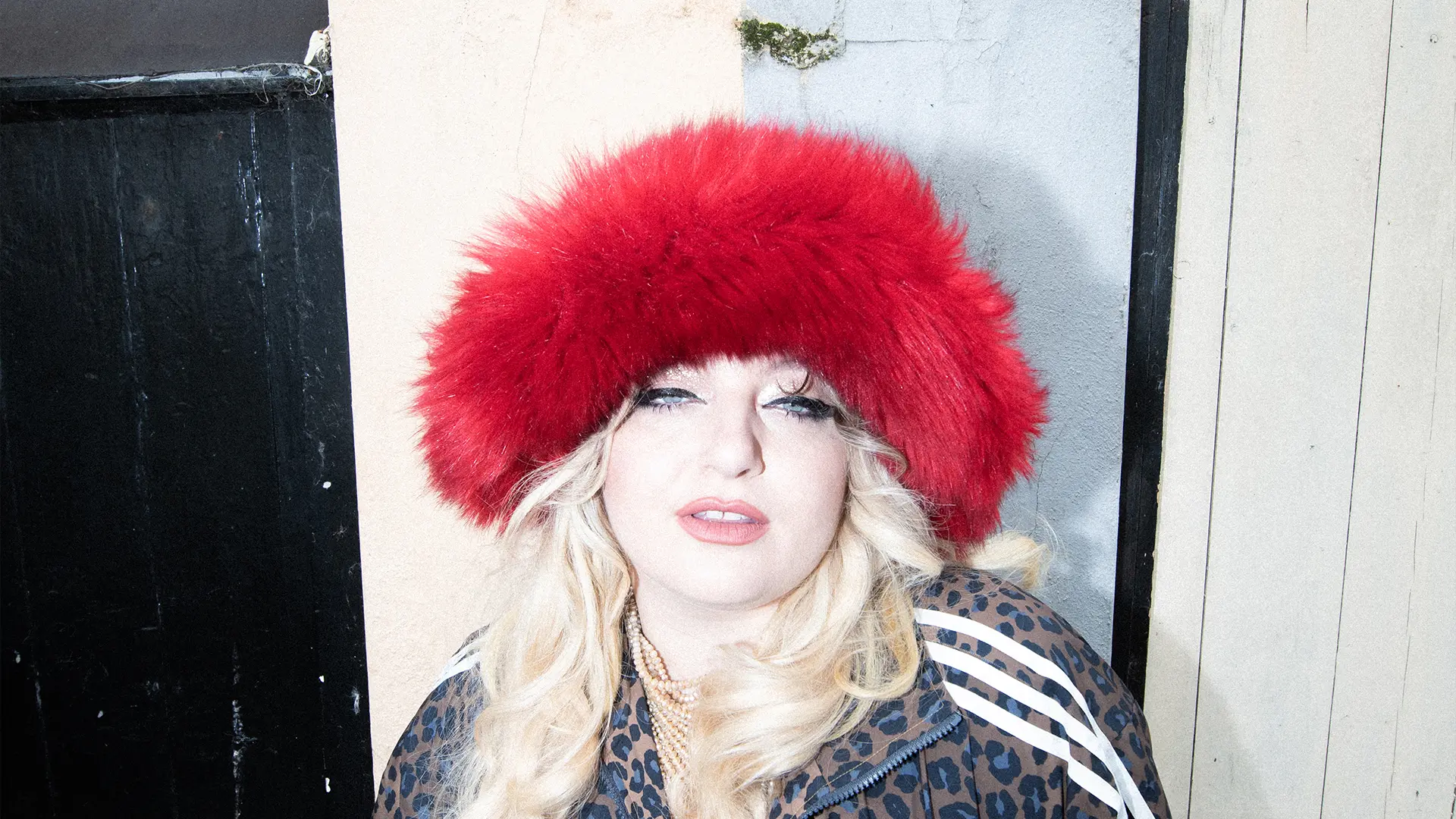
Equally, MEEK’s visual aesthetic is once seen, never forgotten. She wants to reclaim dressing up for everyone, not just those that can afford to indulge in the monied whimsy of high fashion. “I have a clear visual thing for myself, which is basically prom outfits for poor people.” She’s the Cinderella who flipped a finger at the Ugly Sisters, then invited them along to join in the fun, too. “It’s about being absolute glam-trash and owning it. That pink tulle over a stained Adidas jacket? Throw it on. I just want it to feel like something anybody can put together themselves, a sustainable way to look fucking wild. Why not?”
You know that moment you realised Lady Gaga was named after a Queen song? MEEK is kind of the musical and stylistic culmination of that connecting glue, the secret chemical equation that bonds them. She is walking class war, musical defiance and the return of glam rock at its most instantly and commercially appealing. She’s dancing on the gay bar bar-top with a sparkler fizzing in your cocktail.
Yet underneath all this big thinking, high concept, broad talking pop philosophising is a distinct, almost tear-jerking moral issue that should sit comfortably, refreshingly against the societal injustices of a cost-of-living crisis that refuses to disappear. “I don’t think having no money should mean you look plain. I don’t think it means you shouldn’t have access to brilliant entertainment. I don’t think class should dignify expression.”
The best thing about MEEK? There is a point to her. She is as if the comedy queen, Daisy May Cooper stumbled into a charity shop, found a bunch of glittering second hand couture, dolled herself up shamelessly in it, injected the raw spirit of Freddie Mercury and emerged, Mr Ben style, as a fully-fledged MEGASTAR in the making out of the changing rooms, then lead a troubadour of misfits singing down the high street. There is not what you might call a shortage of self-confidence in MEEK. As she sings herself, on a calling card anthem which is sure to become the earworm of the nation once unleashed upon its airwaves: “I’m so fucking fabulous.”